
UNDERSTANDING GRID SAMPLING
UNDERSTANDING GRID SAMPLING
GET A CLEARER PICTURE OF YOUR SOIL WITH GRID SAMPLING
Get a precise understanding of your soil’s variability to apply inputs more efficiently and effectively.
GET A CLEARER PICTURE OF YOUR SOIL WITH GRID SAMPLING
Get a precise understanding of your soil’s variability to apply inputs more efficiently and effectively.
WHY GRID SAMPLING MATTERS
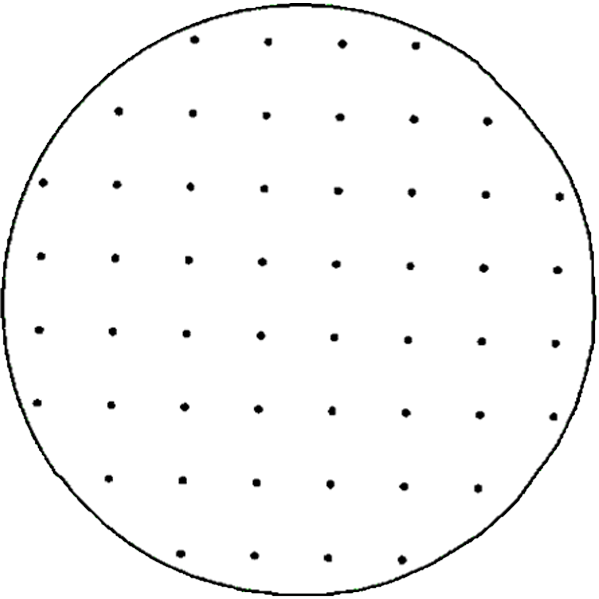
Soil can vary more than you think – even in fields that look flat and uniform. Grid sampling helps you get a clearer, more detailed snapshot of that variability, showing exactly where nutrients are lacking or in excess.
Think of grid sampling as an “X-ray” of your soil — it shows what’s going on beneath the surface so you can treat the right spots the right way.
THE IMPORTANCE OF PRECISION
Apply Lime and Nutrients Where They’re Really Needed
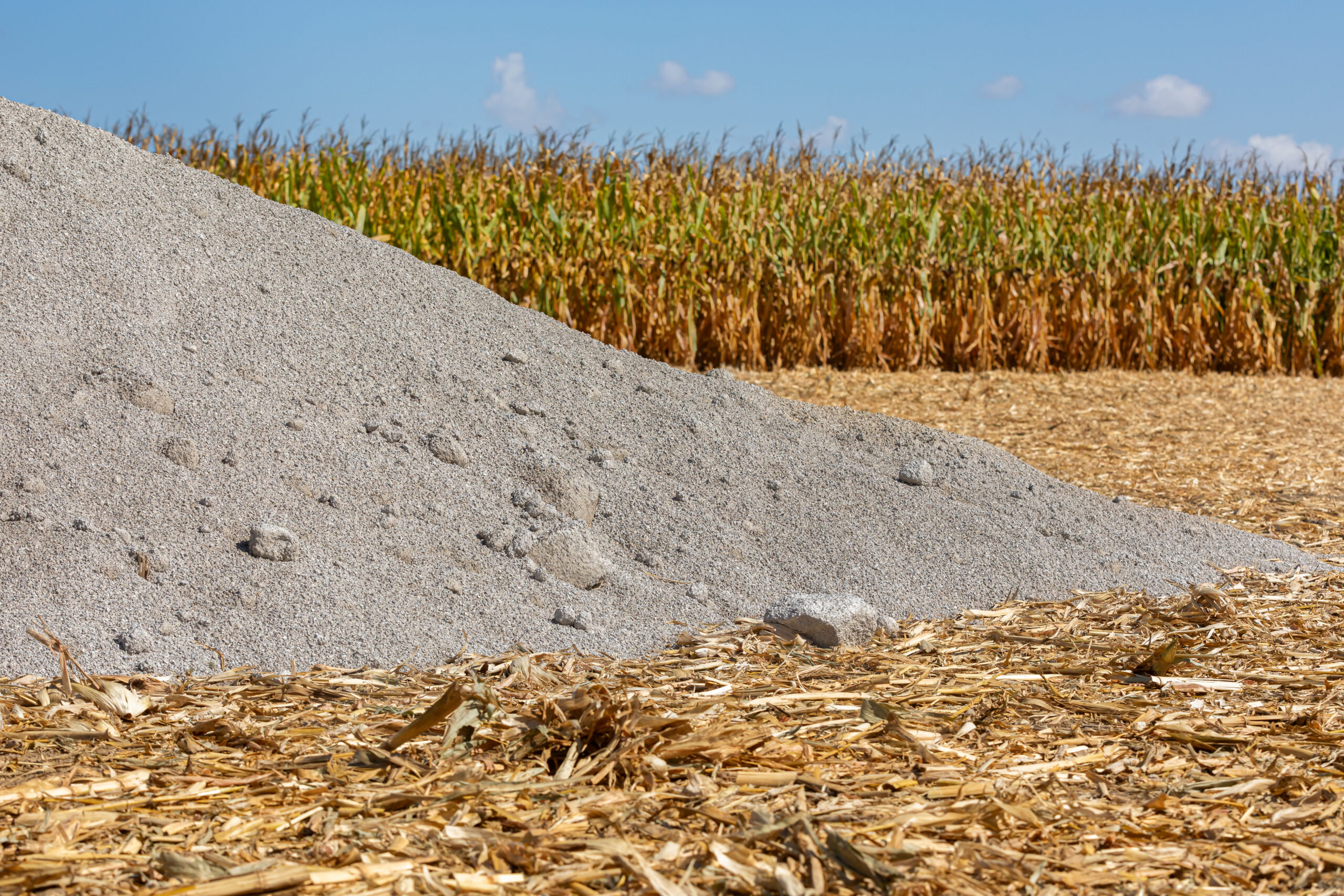
Lime is one of the best examples of how grid sampling adds value. Soil pH can vary widely — even within the same field — from 5.0 up to 7.8.
Applying lime in an area that already has adequate or high pH can actually make the soil too alkaline, creating more problems than it solves. Grid sampling prevents that by mapping out where lime is truly needed.
If you’re doing any sort of high-input management – especially lime – you want to make sure you’re only applying it where it’s really needed.
HOW GRID SAMPLING WORKS
Smarter Data, Better Maps
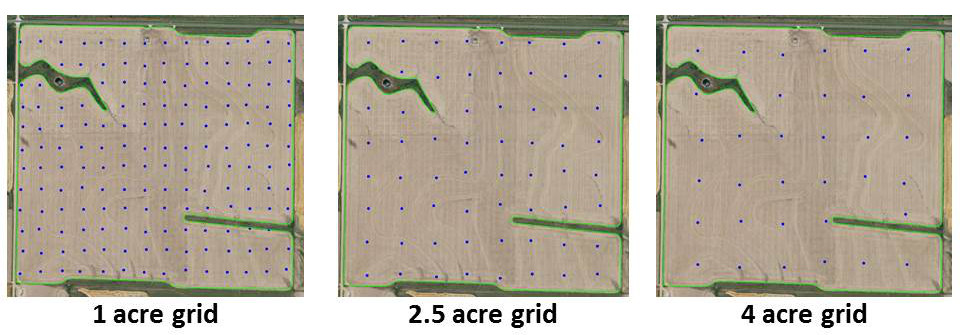
Most grid samples are pulled every 2.5 acres, which provides a good balance between precision and practicality for nutrients like nitrogen, phosphorus, and potassium. For lime applications, if needed we’re able to pull 1-acre grids to capture even finer details, since pH can change quickly across a field.
HOW GRID SAMPLING WORKS
Smarter Data, Better Maps
Most grid samples are pulled every 2.5 acres, which provides a good balance between precision and practicality for nutrients like nitrogen, phosphorus, and potassium. For lime applications, if needed we’re able to pull 1-acre grids to capture even finer details, since pH can change quickly across a field.

ZONE SAMPLING
Looking for a More Budget-Friendly Option? Try Zone Sampling.
Zone sampling uses your field’s natural patterns – such as soil type, yield history, and visible variability – to divide it into management zones.
It’s a targeted, cost-effective way to guide fertilizer and lime decisions, even if you’re not ready to invest in full grid sampling.
Quick Benefits:
READY TO LEARN MORE?
READY TO LEARN MORE?
Get local insights for your fields and start your next season with confidence.
READY TO LEARN MORE?
Get local insights for your fields and start your next season with confidence.

Have questions about which soil sampling method fits your operation best?
Contact Zane Johnson, your local Crop Quest agronomist, or reach out to your nearest agronomist to get started.